Basswood Plywood RFQs: Specify the Core Layers
For wholesale basswood plywood, ask for the layer construction of the exact panel thickness being quoted. Request the face and back veneer descriptions, the core-layer materials, the layer count and a matching cross-section reference. Yangduan Wood lists basswood plywood in multiple thickness options, but its catalogue does not describe those internal layers. Use a supplier-confirmed construction schedule instead of assuming that the product name identifies every layer or that one sample represents every thickness.
Official plywood gallery reference showing several panels. The arrangement identifies catalogue products and is not a cross-section or evidence of any layer count or core material.
Request a construction schedule for one quoted panel
The Basswood Plywood listing describes multiple thickness options within 1.5–12mm and lists five panel sizes. Those fields help identify an order line, but they do not describe its internal construction. A buyer asking about the core should start with the actual thickness and product reference proposed in the quotation.
Request a simple layer schedule for that version. It should distinguish the visible face and back veneers from the layers between them. If the supplier uses different constructions for different thicknesses, ask it to show those alternatives separately instead of giving one general material description for the whole range.
Separate the faces from the core materials
“Basswood plywood” is the catalogue product name. Ask the supplier which layers that name describes and how it identifies the remaining materials. Keep its actual material names in the response. Where a commercial wood name needs clarification, request the supplier’s supporting description rather than silently replacing it with another species name.
Construction field
Supplier response requested
Link to the quotation
Face and back
Material description for each outside layer
Identify whether both sides share one specification
Core layers
Material names and their positions in the panel
Keep the internal construction explicit
Layer count
Count and the supplier’s counting basis
Match it to the offered thickness
Construction reference
A labelled section or matching sample reference
Connect the written schedule to the product
If a requested field remains unconfirmed, leave it marked as open in the enquiry. A concise list of missing construction details is more useful than a completed specification assembled from assumptions.
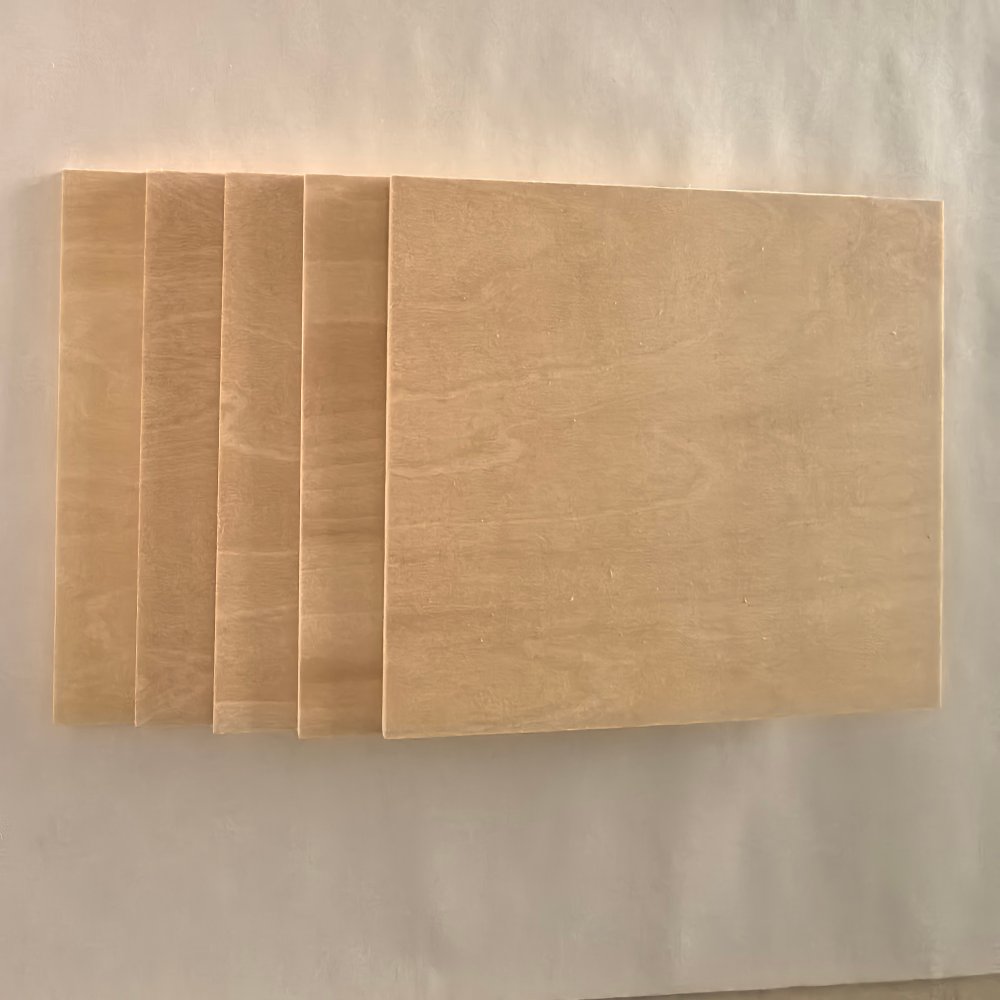
Two-panel reference from the same basswood plywood listing. Visible surface grain does not identify the materials used inside the quoted construction.
Ask how the layer count is defined
Request the number of wood layers in the proposed panel and ask the supplier to explain its counting basis. A labelled cross-section can make the answer easier to follow. Where layer orientation or individual veneer thickness is relevant to the intended project, add those as separate requested fields against the same construction reference.
Keep the total panel thickness and the internal layer schedule together without treating them as interchangeable. A total thickness value does not, by itself, tell the buyer how many layers are present or how that total is distributed. The supplier should identify the construction associated with the quoted version.
Use a cross-section reference with a named sample
Ask the supplier for a section drawing or a suitable edge reference from an identified sample. The reference should show which layer corresponds to each entry in its schedule. It can also mark the face and back so the orientation remains clear when the sample is turned over or photographed.
A photograph can help locate boundaries and relate the explanation to the sample, while the written declaration supplies the material identities. Do not identify a wood species or adhesive from the colour of an edge. If a feature is unclear, ask the supplier to label it rather than trying to resolve the construction from surface appearance alone.
Single-panel catalogue reference. Ask the supplier which thickness and layer-construction schedule a supplied sample represents rather than deriving them from the photograph.
Keep bonding information as a separate requirement
The reviewed page does not state an adhesive identity or a bonding classification. If that information matters to the purchase, request it as a separate supplier response for the specified construction. Explain what documentation or evaluation the buyer needs so the supplier can identify the relevant offered version.
A construction schedule should not be treated as a certificate or a processing-performance result. The catalogue’s references to craft uses do not establish a particular machining setting, safety approval, or test classification. Keep any required processing assessment or product documentation linked to the actual panel and clearly separate from the basic layer description.
Compare and retain the approved construction
Compare quotations using the construction entries as well as dimensions and quantities. Two offers with the same total thickness can still need clarification about their face materials, internal layers, or supporting references. Ask the supplier to identify a proposed construction change on a separate alternative line.
State the quoted product reference and thickness beside the layer schedule.
Keep face, back and core descriptions in separate fields.
Attach the labelled construction reference and sample identifier.
Request an updated schedule when a proposed material or layer arrangement changes.
Send the requested construction fields through the supplier contact page. For repeat enquiries, refer to the previously agreed schedule and ask the supplier to identify any difference. The wood-product articles provide catalogue context; the written, version-specific reply completes the core-layer specification.
Frequently asked questions
Does the name mean every layer is basswood?
The reviewed catalogue does not provide a layer-by-layer material declaration. Ask the supplier to identify the face, back and core materials for the proposed construction.
Can one sample define every thickness option?
Ask which construction and thickness the sample represents. Request separate schedules where the supplier offers different internal arrangements.
Is a clear section image enough to identify the core?
Use it alongside the supplier’s labelled schedule and material declaration. An image alone does not establish species, adhesive identity or a test classification.
Basswood plywoodCore constructionLayer specifications