
Plywood Flatness RFQs: Define Support and Timing
For a plywood flatness RFQ, identify the exact panel size and thickness, then agree how the panel will be supported, when it will be checked and how the deviation will be recorded. Request the supplier’s proposed method and capability before setting an acceptance limit. A face photograph cannot establish flatness.
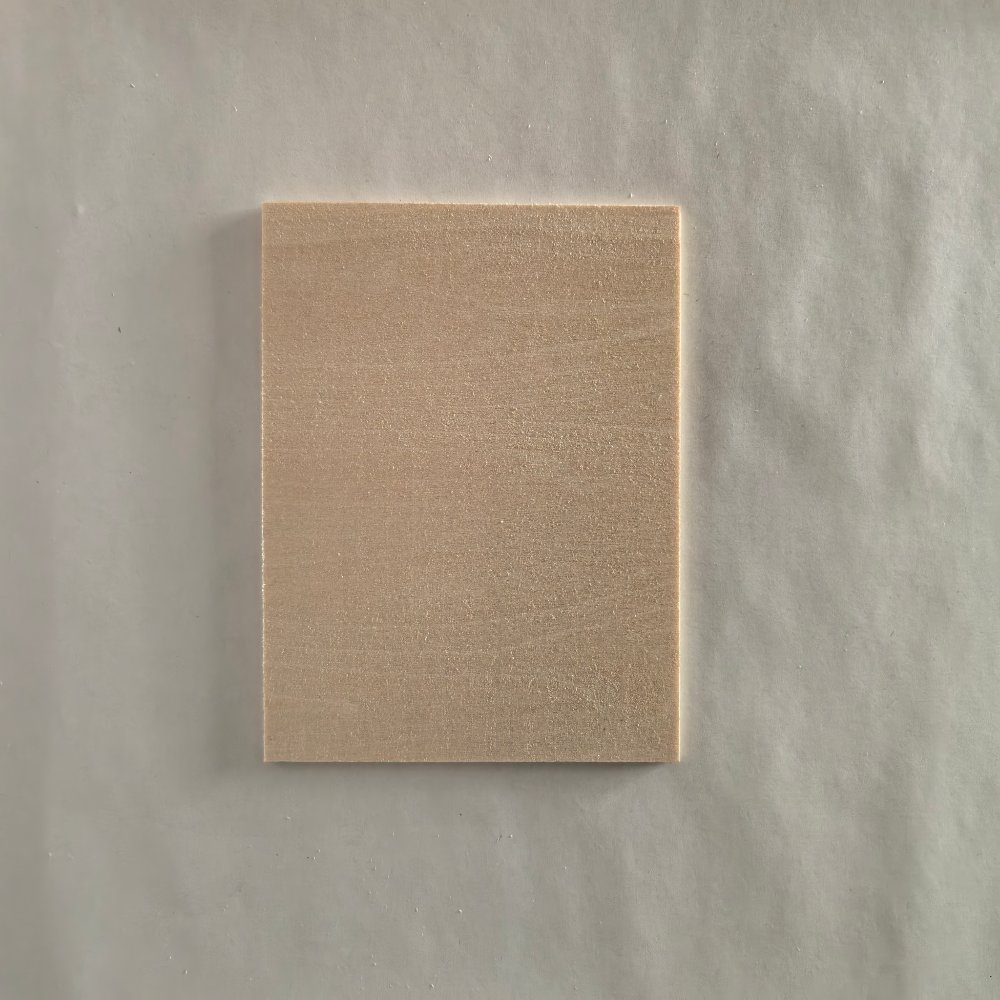
Official Basswood Plywood catalogue reference. The isolated blank identifies the product family; a photograph does not establish flatness or a tolerance.
Turn the catalogue description into a clear question
Yangduan’s Basswood Plywood listing describes a smooth, flat surface and excellent dimensional stability. It offers multiple thickness options from 1.5 mm to 12 mm and lists five panel sizes, from 100×100 mm to 420×300 mm. These supplier descriptions help identify the offer, but they do not provide a measured flatness limit or an agreed checking method.
For wholesale basswood plywood, a useful RFQ asks how a selected panel will be assessed for flatness. The answer needs more than a photograph or the word flat. It should connect a clearly identified panel with a support arrangement, observation timing and a way to record the deviation being discussed.
Identify the panel before comparing flatness
Start with the exact quoted length, width and thickness. If several combinations are required, keep them on separate lines. A response for one small blank should not silently become a capability statement for every thickness and panel size in the catalogue. Ask the supplier which combinations its proposed flatness response covers.
Then define whether the requirement concerns the complete blank or a stated working area within it. For a craft project, the buyer may care about the area used in its own assembly, while the supplier may describe the full panel. Put that distinction in the enquiry. It prevents a later discussion in which both parties use the same word but refer to different areas.
Specification field
Question to resolve
Record to retain
Panel identity
Which size and thickness?
Exact quotation line
Support
How is the panel positioned?
Supplier setup description
Timing and condition
When and in what stated condition?
Check stage and relevant conditions
Deviation
What is measured and how?
Location, direction, units and result
Agree what the support arrangement means
Ask the supplier to describe the surface or fixture used for its assessment and how the panel is placed on it. Clarify whether the panel rests freely or is held down, and whether any applied force forms part of the method. These conditions belong with the result because a forced position and an unrestrained observation describe different situations.
An annotated setup sketch or a clear assessment photograph can make the response easier to understand. Ask for it as an explanation of the method, not as a substitute for the recorded result. The buyer and supplier should agree the arrangement before either interprets a visible gap as an acceptance decision. This article does not prescribe a universal fixture for all plywood orders.
Separate official product arrangement. Specify the quoted panel’s actual size and thickness before discussing any flatness requirement.
Define the checking stage and timing
State whether the proposed check concerns the supplier’s dispatch stage, an agreed sample evaluation or receipt of the shipment. Ask the supplier to describe the panel’s condition at that stage, including any stated preparation or waiting period used in its method. Do not add a conditioning duration simply because another plywood enquiry used one.
If a receiving check is important, discuss how the proposed packing and unpacking sequence relate to that check. Keep the recorded conditions with the observation. A supplier’s dispatch reading and a buyer’s later reading may have different contexts; retain the distinction instead of assuming that the two numbers were collected in the same way.
Specify the observation before choosing a limit
Ask how the supplier expresses deviation, which locations or directions are assessed and what units appear in the response. If a measuring tool is used, request its identification and the method description needed to interpret the reading. Keep photographs and numeric records linked to the same panel rather than combining an image from one sample with a number from another.
Next ask what the supplier can offer under that defined method. The buyer can compare the response with its actual project requirement and discuss an acceptance limit. The catalogue does not establish that limit, and this article supplies no invented tolerance. A practical agreement combines the requirement with a method both parties understand and a capability response the supplier has actually made.
Official panel assortment reference. This arrangement does not show a flatness test setup or establish a common tolerance across sizes.
Keep flatness separate from appearance and construction
Face colour, grain marks and edge appearance are separate observation tasks. Core-layer construction is another specification field. An accepted face photograph does not settle flatness, and a declared ply arrangement does not supply a measured result. Keep these answers in separate fields while linking them to the same selected product version.
Before ordering, retain the selected panel combination, agreed support and timing, recording method and supplier response together. For later changes in size or thickness, ask whether the existing agreement still applies. This makes a flatness requirement usable during purchasing without extending one sample’s observation to an unspecified range of products.
Identify one exact panel combination for each response.
Agree the support arrangement and checking stage.
Keep the method and conditions beside each result.
Confirm the acceptance requirement before treating a sample as approved.
FAQ
Does the product photograph prove a flatness tolerance?
No measured tolerance is established by the catalogue photograph. Ask for a defined method, conditions and supplier response for the selected panel.
Can one response cover every listed thickness?
Ask the supplier which combinations it covers. Preserve any size or thickness limits rather than assuming a common capability across the catalogue.
What should a buyer send first?
Send the exact panel dimensions and intended checking stage, then ask the supplier to propose a clear support and recording method for discussion.
Read other sourcing topics in the Yangduan blog, or send the panel-specific RFQ with your project requirements.
wholesale basswood plywoodpanel flatnesssupplier specifications